How to Assess Fine Art Quality: A Collector's Guide

Table of Contents
- Why Fine Art Quality Matters Before You Buy
- Fine Art Print Quality: The Elements That Decide It
- Archival Fine Art Prints: What the Term Actually Means
- Limited Edition Fine Art Photography: Reading the Numbers
- Your Fine Art Print Buying Checklist
- Telling High Quality Art from Low Quality Art
- Assessing Art When You Are New to Collecting
- Conclusion
- Frequently Asked Questions
Last Updated: 20 October 2026
Why Fine Art Quality Matters Before You Buy
Learning how to assess fine art quality is the difference between buying a piece you treasure for decades and one that fades, buckles or loses value within a few years. At paulstrettonstephens, we have spent years making limited edition coastal photography, and we know that quality is not a vague feeling. It is a set of measurable choices about paper, ink, printing method, edition size and the artist's own hand.
A common mistake is to judge a print by its frame or its subject alone. Two pieces can show the same coastline and sit in identical frames, yet one will last a lifetime and the other will not. The gap between them comes down to materials and honesty about how the work was made.
Below, we break down exactly what to look for, from the weight of the paper to the numbers written on the certificate. The good news is that you do not need an art degree to spot the difference. You need a checklist and a little patience.
Fine Art Print Quality: The Elements That Decide It
Fine art print quality is the combination of paper choice, ink stability, printing method and the artist's control over the final image. Get any one of these wrong and the print will show it, often within a few years.
Start with the paper. A good fine art paper has weight and texture you can feel through the packaging. It should not bend easily between your fingers, and it should have a matte or lightly textured surface rather than a thin, shiny gloss. Cotton-based papers are the standard for serious work because they hold ink well and resist yellowing.
Ink matters just as much. Pigment inks sit on the paper surface and resist fading far better than dye inks, which soak in and break down over time. Ask which ink type was used. If the seller cannot tell you, treat that as a warning sign.
Then there is the printer's hand. An artist who controls the output, checks proofs and signs each piece is doing something very different from a service that presses "print" on demand. The Fine Art Trade Guild's print standards set out recognised benchmarks for editioning and print quality, and they are worth a look before you spend serious money.
Archival Fine Art Prints: What the Term Actually Means
Archival fine art prints are prints made with materials and methods designed to resist fading and deterioration over many decades. The word "archival" is not a legal guarantee, which is why you should ask what backs it up.
Look for three things: acid-free or cotton paper, pigment inks, and proper storage or framing guidance from the artist. A print sold as archival should come with care instructions. If it arrives loose in a tube with no paperwork at all, the label is doing a lot of heavy lifting.
Framing matters too. Even a superb print will degrade behind glass that traps heat or against a backing board that is not acid-free. Ask whether the piece should be framed with a mount and UV-filtering glass.
Limited Edition Fine Art Photography: Reading the Numbers
Limited edition fine art photography is photography released in a fixed, numbered run, with no further prints made once that run sells out. The numbers tell you how rare the piece is, and rarity is a large part of what you are paying for.
Read the edition notation carefully. A mark like "3/20" means this is the third print in a run of twenty. The smaller the total, the more exclusive the piece. Some artists split editions by size, so an image might exist as five large prints and twenty smaller ones.
Ask these questions before you commit:
- How many prints are in the edition, in total?
- Does the edition count include every size, or is each size separate?
- Will the artist reprint once the edition sells out?
- Is the edition number written on the print itself, not just the receipt?
A serious artist will answer all four without hesitation. Vague answers, or a promise to "print more if demand is high", undercut the whole point of a limited run.
We structure our own editions this way. For example, the V&A's guide to prints and editions explains how editioning works in practice, and it is a useful primer before you ask an artist the same questions.
Limited Edition - Resting Armada by Paul Stretton-Stephens →
Your Fine Art Print Buying Checklist
Use this checklist before you pay for any print. It takes five minutes and saves a great deal of regret.
- Paper is cotton or acid-free, with visible weight and texture
- Ink type is confirmed as pigment, not dye
- Edition size and number are stated clearly
- Print is signed by the artist
- A Certificate of Authenticity is included
- Care and framing guidance is provided
- The seller can explain the printing method
- Returns or damage policy is written down
- The image is not a stock photo sold under many names
| What to Check | Why It Matters | Warning Sign |
|---|---|---|
| Paper type | Longevity and feel | Thin, glossy, no detail given |
| Ink type | Fade resistance | Seller cannot say |
| Edition size | Rarity and value | "Unlimited" or unclear |
| Signature | Proof of artist involvement | Unsigned, no certificate |
| Paperwork | Traceable provenance | No certificate or care guide |
That last row is where most buyers get caught out. A print without paperwork is hard to insure, hard to resell and hard to prove is what it claims to be.
Telling High Quality Art from Low Quality Art
High quality art reveals itself under raking light. Tilt the print towards a window and look across the surface at a shallow angle. A well-made print shows even ink coverage, deep shadows and a paper texture that catches the light. A poor one looks flat, with banding, patchy colour or a plasticky sheen.
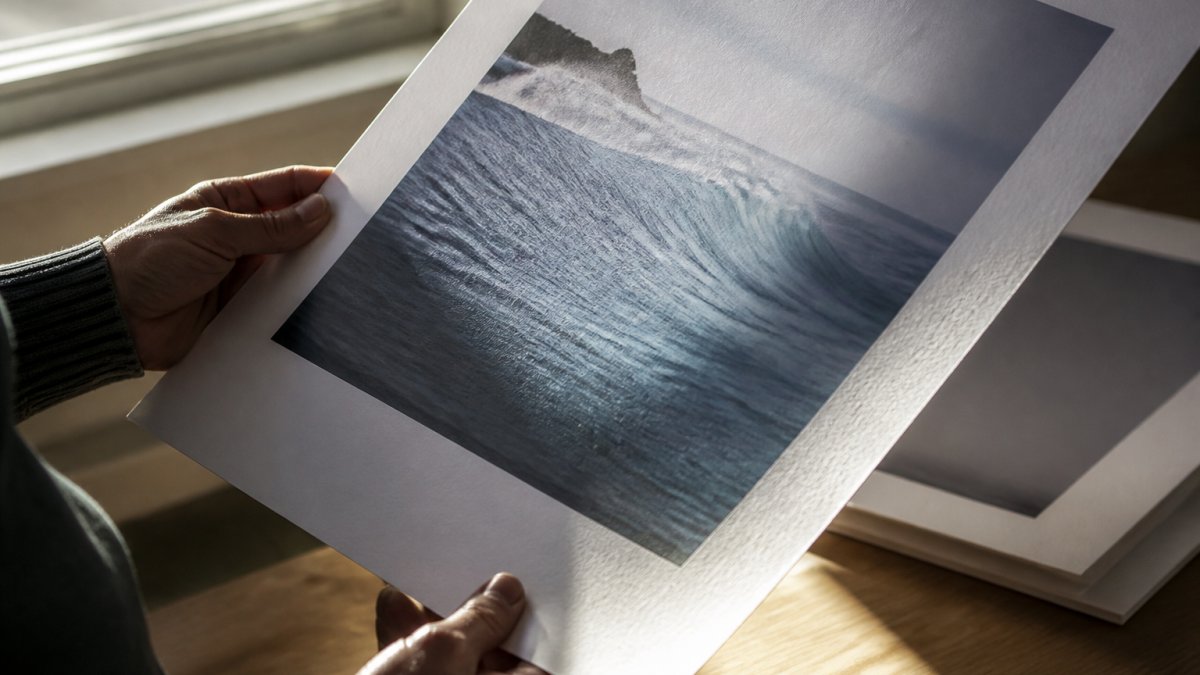
Look for these markers of quality:
- Depth in the shadows. Good prints hold detail in dark areas rather than crushing them to black.
- Clean edges. No ink bleeding or fuzzy borders.
- Consistent colour. No streaks, banding or uneven patches.
- Honest texture. Paper that feels like paper, not plastic.
Low quality shows up as flat contrast, oversaturated colour that looks unnatural, and a surface that reflects light like a poster. If the print looks better on a phone screen than in your hands, that is a problem.
Assessing Art When You Are New to Collecting
Start with one question: does the artist explain their process? A maker who can talk you through their paper, ink and edition choices is showing you their working. That transparency is worth more than any glossy brochure.
Next, look at the artist's credentials. Membership of a professional body, competition longlistings and exhibition history all give you something to check. the Visual Artists Association is one example of a body that vets its members, and membership is a signal you can verify rather than take on trust.
Then trust your own reaction. Art is meant to move you. If a piece makes you pause, that matters. Quality and emotional pull should point the same way, and when they do, you have found something worth keeping.
Conclusion
The hardest part of collecting is not spotting a beautiful image. It is knowing whether the piece behind it will still look beautiful in twenty years. Paper, ink, edition size and paperwork are the four tests that separate lasting art from a passing purchase.
At paulstrettonstephens, we build every print around those four tests. Our limited edition coastal photography uses Hahnemühle Photo Rag and pigment giclée printing, arrives signed with its edition number and a Certificate of Authenticity, and is released in fixed runs. Pieces such as Resting Armada show how a painterly ICM image can bring calm to a room while holding its value.

Get started with paulstrettonstephens and choose a piece you will still be glad you bought a decade from now.
Frequently Asked Questions
How can you tell if a fine art print is high quality?
Look at the paper first. A quality fine art print sits on heavy, matte stock such as Hahnemühle Photo Rag, not thin glossy paper. Tilt it towards a window: you should see depth in the shadows and no banding in smooth areas like sky. Check that the ink sits on the surface rather than soaking through, and ask what printer and inks were used. A certificate of authenticity, a signature and a clear edition number are all signs that the maker stands behind the work.
What makes a fine art print archival?
Archival fine art prints use pigment-based inks and acid-free papers that resist fading and yellowing over decades. The two things that matter most are the ink type and the paper's pH. Pigment inks outlast dye-based inks considerably under normal indoor light, and cotton rag papers avoid the acids that cause brittleness. Ask the seller directly about both. Framing behind UV-filtering glass and keeping the print out of direct sunlight will extend its life further.
Does a limited edition make a print more valuable?
A limited edition only adds value when the number is small, honestly recorded and matched by a signed certificate. In limited edition fine art photography, an edition of 5 at A1 size is meaningfully scarcer than one of 200. Ask how many sizes the image is sold in, because a total edition spread across three sizes is larger than it first appears. Scarcity supports value, but the quality of the image and the artist's track record do the heavier lifting.
How can you assess an artwork if you are new to collecting?
Start with a fine art print buying checklist and work through it methodically: paper weight and finish, ink type, edition size, signature, certificate of authenticity, and the artist's exhibition history. Then judge the image itself. Stand back and ask whether it holds your attention after a week, not a minute. Buy from artists whose work you have seen consistently, and ask questions about process. A maker who answers in detail is usually a maker worth buying from.