Acrylic Facemount vs Metal Art Prints: A Collector's Guide

Last Updated: November 2, 2026
Quick Summary
An acrylic facemount bonds a photographic print behind clear acrylic so the image appears to sit inside the panel, giving softer reflections and a sense of depth. A Chromaluxe HD metal print fuses the image into a coated aluminium sheet for a flatter, glossier, more vibrant result. Choose facemount for atmospheric, painterly work and metal for vivid, high-contrast colour.
- Optical-grade acrylic, a rigid backing and clean bonding separate a good facemount from a cheap one.
- Gloss metal reflects windows and lamps strongly and can wash out part of the image in bright rooms.
- Chromaluxe comes in gloss, satin and occasionally textured finishes, with satin reducing glare at some cost to punch.
- Never use ammonia-based glass cleaner on acrylic, as it can cloud the surface permanently.
- Match the medium to the photograph rather than to the room's colour scheme.
Table of Contents
- Understanding Acrylic Facemount vs Metal Art Prints
- How Acrylic Facemount Artwork Is Constructed
- How Chromaluxe HD Metal Prints Are Made
- Chromaluxe HD Metal Prints: Vibrancy and Gloss
- Museum Quality Acrylic Facemount Artwork: Depth and Clarity
- Acrylic vs Metal Photo Prints: Side-by-Side Comparison
- Giclée Archival Paper Prints: The Third Option
- Durability, Cleaning and Long-Term Care
- Choosing the Right Finish for Your Coastal Artwork
- Frequently Asked Questions
Understanding Acrylic Facemount vs Metal Art Prints
Choosing between acrylic facemount and metal art prints comes down to one question: what do you want the surface to do with light? An acrylic facemount is a photographic print bonded behind clear acrylic, so the image appears to sit inside the panel, while a metal print fuses the image directly into a coated aluminium sheet for a flatter, glossier result.
The coastal collection is available in acrylic facemount, Chromaluxe HD metal and giclée archival paper, so the trade-offs are worth explaining plainly.
How Acrylic Facemount Artwork Is Constructed
Museum quality acrylic facemount artwork is built in layers. A photographic print is mounted to a rigid backing, then bonded face-down to a sheet of clear acrylic using an optically clear adhesive. The acrylic becomes the front surface; the print sits sealed beneath it.
That construction is why the image reads as though it floats: physical depth between your eye and the ink, plus the acrylic's polished face adding a subtle internal reflection that lifts shadows.
Three details separate a good facemount from a cheap one:
- Optical-grade acrylic rather than standard glazing, which keeps the image sharp edge to edge
- A rigid backing that prevents bowing on larger formats
- Clean bonding with no trapped dust or air bubbles, which is where budget framers cut corners
A common mistake is judging a facemount in a dim showroom. The finish rewards directional light.
How Chromaluxe HD Metal Prints Are Made
Chromaluxe HD metal prints are printed onto a thin ChromaLuxe aluminium panel, producing a vibrant, high-definition glossy display.
With no glazing in front of the image, the print presents colours bright and sharp, with a high gloss finish.
The thin aluminium panel keeps the print lightweight and rigid.
Chromaluxe HD Metal Prints: Vibrancy and Gloss
Metal wins on pure colour impact. Metal's high gloss finish gives the image a vivid, high-definition appearance, which suits photographs that depend on colour impact.
The trade-off is glare. A high gloss finish reflects whatever is opposite it: a window, a lamp, a bright doorway. In controlled lighting that adds sparkle; in a sunlit lounge it can wash out part of the image.
For coastal work, this cuts both ways. A vivid sunset or saturated seascape looks extraordinary on metal, while a soft, misty, low-contrast scene can lose delicacy because the gloss pushes contrast.
Our own metal originals, such as After the Sun Has Spoken, show this strength: fiery orange against deepening blue is exactly the kind of colour range that suits a high-gloss metal print.
Museum Quality Acrylic Facemount Artwork: Depth and Clarity
Acrylic facemount suits viewers who want image depth rather than surface punch, as the acrylic layer creates a quiet separation between viewer and print.
Light reflection on acrylic facemount is softer than on gloss metal.
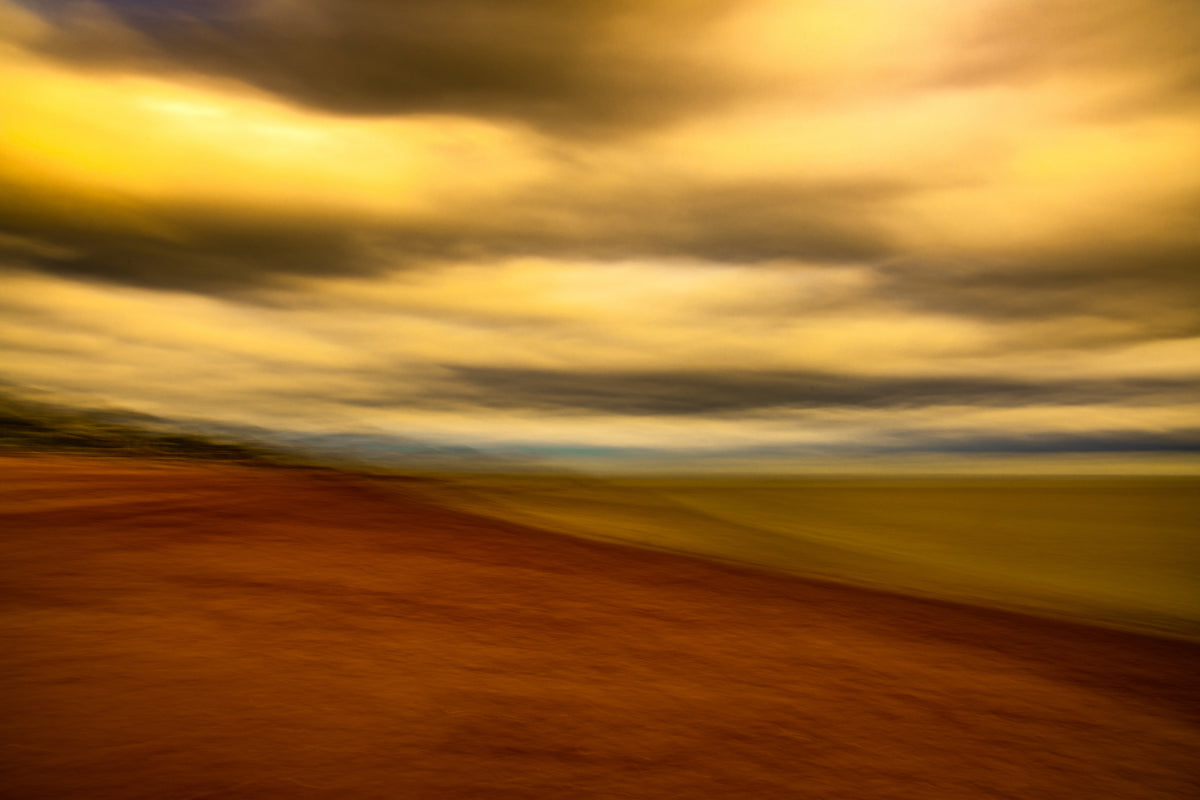
This is why painterly, atmospheric photography suits facemount so well. Intentional Camera Movement work, with its blurred horizons and blended colour, gains a dreamlike quality behind acrylic that a gloss metal panel can flatten.
Acrylic vs Metal Photo Prints: Side-by-Side Comparison
Here is the short version, based on how each medium actually behaves on a wall.
| Feature | Acrylic Facemount | Chromaluxe HD Metal |
|---|---|---|
| Construction | Print bonded behind clear acrylic with optically clear adhesive and rigid backing | Image dye-sublimated into a specially coated aluminium sheet |
| Colour vibrancy | Rich, slightly softened by the acrylic layer | Highest saturation, very punchy, especially in blues and greens |
| Contrast and depth | Deep blacks, strong perceived depth from the acrylic layer | High contrast, flatter surface with no internal depth |
| Surface finish | Gloss with soft internal reflection | High gloss, mirror-like at certain angles |
| Glare | Moderate, diffuse across the surface | Strong at certain viewing angles, can wash out in bright rooms |
| Durability | Good; acrylic can scratch if mishandled | Excellent scratch resistance; coating resists most marks |
| Weight | Heavier for the same size due to acrylic and backing | Light for its size; thin aluminium panel |
| Best for | Atmospheric, painterly, tonal images with soft gradients | Vivid, high-contrast, colourful images with strong separation |
Both hold up well over time when cared for properly. If you are weighing up finishes before committing, our guide on how to assess fine art quality walks through the markers that separate a well-made print from a cheap one.
Mini-Squarine 008 — Peace Beneath the Clouds →
How Size and Specification Change the Decision
The table above describes the mediums at their best, but the practical choice often shifts once you factor in size, thickness and mounting hardware.
Thicker acrylic changes the look.
Finish options vary by maker. Chromaluxe comes in gloss, satin and occasionally textured finishes; gloss is the most vibrant but most reflective, while satin reduces glare at the cost of some punch.
Matching the Image to the Medium
Beyond broad categories, the characteristics of the photograph itself should guide the choice.
- Dark, moody images with deep shadows can suit acrylic facemount, which adds a sense of depth.
- Fine detail and sharp texture, rock pools, pebbles, foliage, survive well on both, but metal's flat surface can make detail appear harder and more graphic.
- Saturated colour and strong separation, sunsets, turquoise water, high-contrast skies, are the natural territory of Chromaluxe.
- Reflective highlights, wet sand, glassy water, sun glint, can distract on gloss metal at certain angles, whereas acrylic's softer reflection spreads them evenly.
- Soft gradients and atmospheric haze, mist, fog, ICM blur, can flatten on gloss metal but gain a dreamlike quality behind acrylic.
A useful test is to view the image at the size you intend to print and ask which quality you want the surface to amplify: colour and punch suggests metal; depth and atmosphere suggests facemount.
Giclée Archival Paper Prints: The Third Option
Think of it as three distinct display media rather than three quality tiers. Paper is not lesser; it is simply a different visual language.
Durability, Cleaning and Long-Term Care
Care routines differ by surface, and getting them wrong is the fastest way to damage a print.
Cleaning Each Surface Safely
Watch out: never use ammonia-based glass cleaner on acrylic. It can cloud the surface permanently, and no amount of polishing will bring it back. The same applies to alcohol-based cleaners on some coated metal finishes, check the maker's guidance before using anything beyond water and a microfibre cloth.
Scratches, Marks and Whether Damage Can Be Repaired
Giclée paper is the least repairable of the three: a mark on the printed surface is permanent, and the only remedy is replacement. This is one reason paper prints are usually framed behind glass, which adds a protective layer but introduces reflections of its own.
Long-Term Ageing and UV Exposure
A common pattern is for collectors to rotate pieces between rooms to limit cumulative UV exposure, particularly in south-facing rooms where sunlight is strongest for the longest part of the day.
Handling and Installation Risks
If you are investing in a limited edition, our article on whether limited edition art prints are worth buying covers how editions are valued.
Choosing the Right Finish for Your Coastal Artwork
Match the medium to the photograph, not to the room's colour scheme. That is the rule we would give any collector, and it rarely fails.
Vivid, high-contrast coastal scenes with strong colour separation suit Chromaluxe HD metal. Atmospheric, painterly work built on soft gradients and tonal depth suits acrylic facemount.
Lighting matters too: a wall facing a bright window may cause reflections on a high gloss surface, so consider where the piece will hang.
For a first piece, the Squarine 001 - Aqua Reverence (30cm x 30cm) shows how ICM coastal work is presented, and our guide to choosing coastal fine art for your home office covers placement in a smaller space.

The hardest part is not understanding the finishes; it is committing to one when you cannot see it in person. Explore the coastal collection at paulstrettonstephens, where artworks are available in the formats listed in our product range, with each piece described plainly so you know what will arrive. Get started with paulstrettonstephens and choose the finish that lets your coastline breathe.
Frequently Asked Questions
What is the difference between acrylic facemount and metal prints?
An acrylic facemount bonds the photographic print behind a sheet of clear acrylic, which adds a sense of depth. A metal print, such as a ChromaLuxee HD metal print, is printed onto an aluminium panel for a high-gloss finish. The acrylic option tends to feel deeper and more dimensional, while metal looks brighter and more contemporary on the wall.
Which looks better for coastal photography, acrylic facemount or metal?
It depends on the mood you want. Acrylic facemount artwork can give soft, painterly coastal images a sense of depth, which suits many interiors. ChromaLuxee HD metal prints suit bolder, high-contrast seascapes where colour vibrancy and sharpness matter most. Many collectors own both and rotate them by season.
How do you clean and care for acrylic facemount art?
Dust gently with a soft microfibre cloth. For fingerprints, use a small amount of mild soap in water on a damp cloth, then dry immediately with a clean, dry cloth. Avoid ammonia-based cleaners, abrasive pads and direct sunlight on the face. Keep the artwork away from radiators and damp walls to protect the backing and hanging hardware.
Are metal prints suitable for displaying coastal photography?
Yes. ChromaLuxee HD metal prints suit dramatic seascapes and high-contrast shoreline scenes. The gloss finish can reflect light, so position the piece where window glare will not wash out the image. For softer, more atmospheric coastal work, an acrylic facemount often reads more naturally.